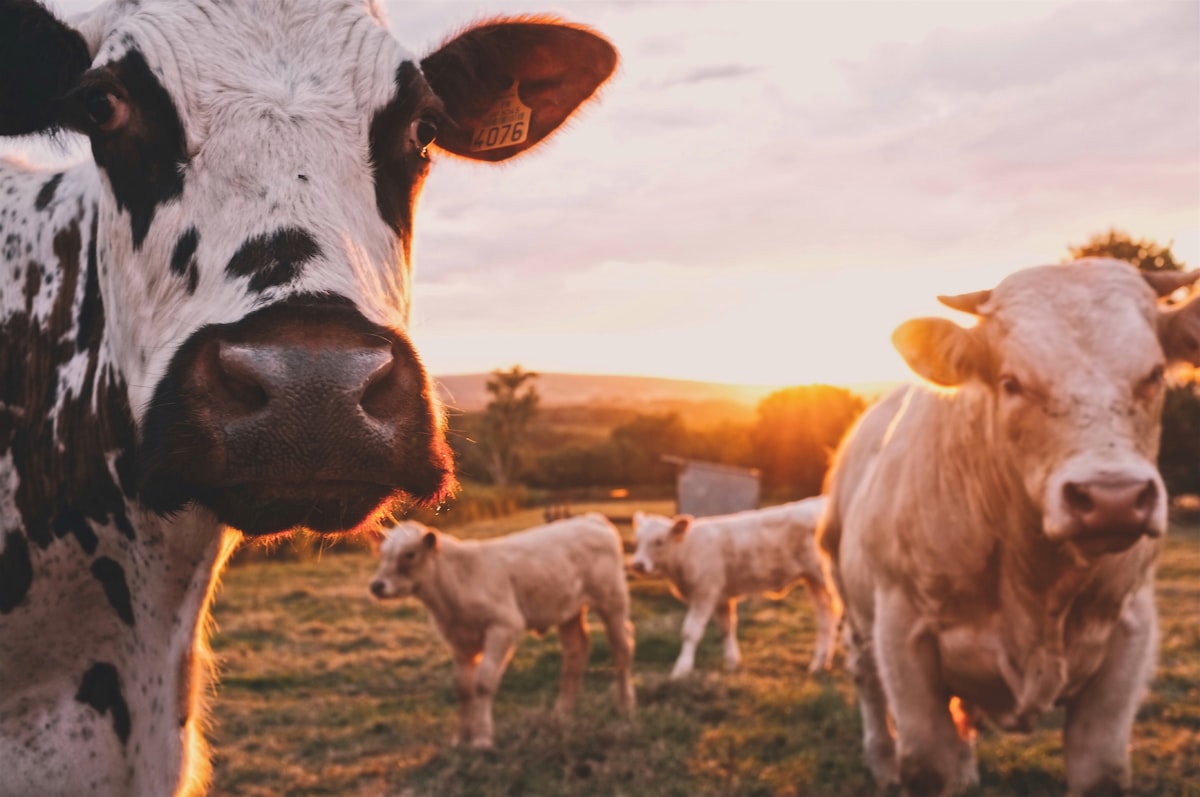
Across the developed world, something unprecedented is happening to livestock. In a span of just two years, governments from Washington to Wellington have ordered the destruction, buyout, or forced reduction of hundreds of millions of animals. The scale is staggering: over 174 million birds culled in the United States alone. Nearly half a million sheep slaughtered in Greece. Thousands of dairy farms shuttered in the Netherlands. And the U.S. cattle herd has shrunk to levels not seen since 1951 — a 73-year low.
The official rationale varies by country: climate emissions in Ireland and New Zealand, nitrogen pollution in the Netherlands, avian influenza in the United States, bovine tuberculosis in Britain, sheeppox in Greece, lumpy skin disease in France. But the cumulative effect is the same everywhere — fewer animals, fewer farmers, and a fundamental restructuring of the global food chain that has provoked the largest agricultural protests Europe has seen in decades.
This investigation, drawing on government data, scientific reports, and interviews with agricultural economists across twelve countries, examines the full scope of what may be the largest coordinated reduction of privately-owned livestock in modern history — and asks whether the cure is more dangerous than the disease.
By the Numbers: The Global Livestock Crisis, 2024–2026
due to avian flu (H5N1)
in Greece (sheeppox)
lowest since 1951
on farm buyout schemes
may need to cull
England & Wales (2024)
🇺🇸 United States: The Worst Animal Disease Outbreak in History
The numbers beggar belief. Since February 2022, the highly pathogenic avian influenza (HPAI H5N1) has swept through 47 U.S. states, resulting in the destruction of more than 168 million birds — chickens, turkeys, and other poultry. It is, by any measure, the most expensive animal disease event in American history.
The economic shockwaves were immediate. Egg prices soared from $4.14 per dozen in December 2024 to a record $6.23 by March 2025, prompting federal lawsuits against major producers including Cal-Maine Foods and Rose Acre Farms for alleged price-fixing. Separately, the Trump administration announced a $12 billion emergency package in December 2025 — but not for poultry producers or avian flu victims: the funds were directed at row-crop farmers (corn, soybeans) whose export markets had been gutted by retaliatory trade tariffs.
But the crisis extends far beyond poultry. In March 2024, H5N1 was detected in dairy cattle for the first time in U.S. history — a development that alarmed virologists worldwide. By July 2025, over 1,074 confirmed herds across 17 states had tested positive. Of clinically ill cows, 6.8% died or were euthanized, while another 31.6% were culled within 20 days. Seventy human cases were recorded, including one death.
The broader cattle picture is equally grim. The U.S. herd has contracted to 86.2 million head — its lowest point in 75 years. The beef cow inventory stands at levels not seen since 1961, and calf crop numbers have dropped to lows last recorded in 1941. Federal cattle slaughter fell 6.9% in 2025, to approximately 29.1 million head.
"We're not just losing animals. We're losing a way of life that's sustained communities for generations."— National Cattlemen's Beef Association statement, January 2026
🇳🇱 The Netherlands: Buying Out a Nation's Farmers
No country illustrates the collision between environmental regulation and agricultural tradition more starkly than the Netherlands. The world's second-largest food exporter by value is systematically dismantling its own livestock sector in response to a nitrogen pollution crisis that has been litigated all the way to the nation's highest court.
The facts: Dutch livestock farms produce ammonia emissions that exceed European Union Natura 2000 habitat protection standards by a factor of four. Court rulings mandated action. The government's response was a series of voluntary buyout programs that have already consumed €1.81 billion and closed 723 farms, with another 779 farmers who have already emptied their barns.
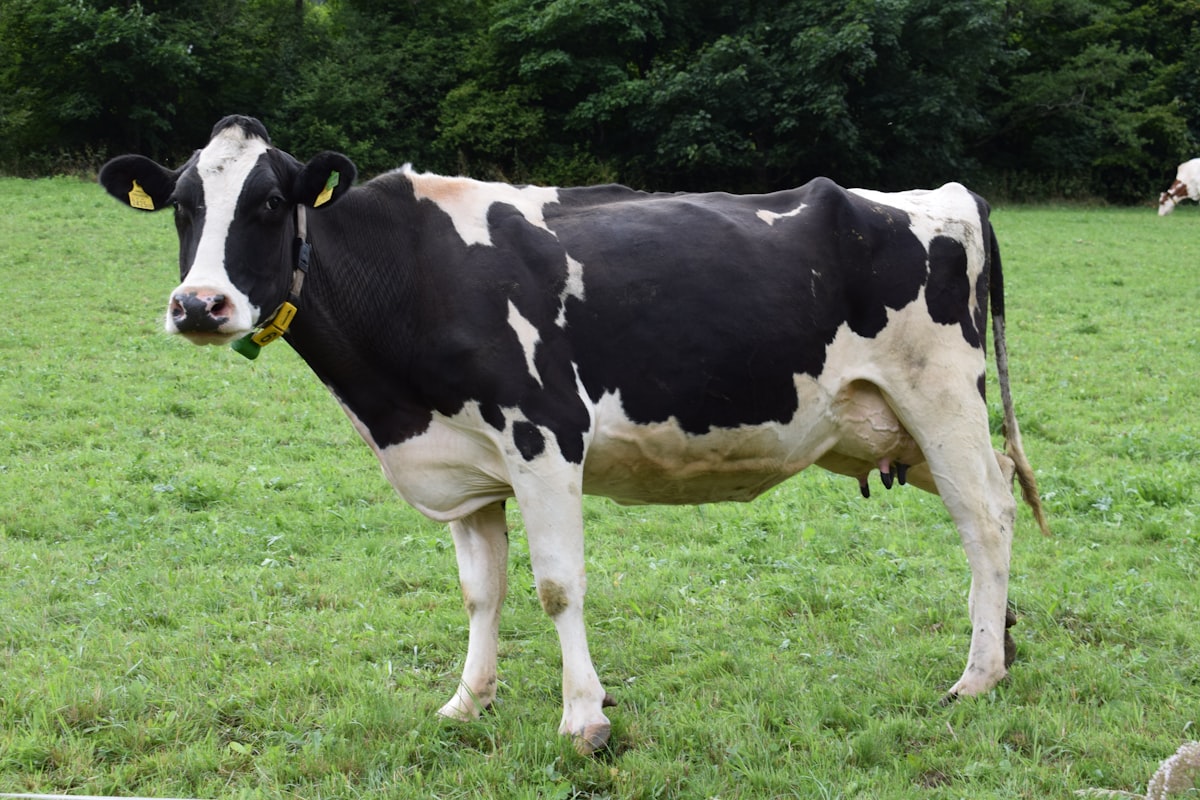
In January 2026, the government announced a new €750 million buyout round (Vbr), offering 110% of market value to farms within 1,000 meters of Natura 2000 sites. The pig herd has already fallen below 10 million for the first time since 1997. The dairy herd dropped 3.3% to 3.65 million.
But an investigative report by NRC, Follow the Money, and Omroep Gelderland in January 2026 revealed a devastating inefficiency: the €3 billion spent on voluntary programs achieved only 7% of the required nitrogen reduction. The same result could have been obtained for €1.5 billion less — and three times faster — by targeting the 500-600 largest polluters instead.
ABN Amro projects the Dutch livestock sector will shrink by 15-18% by 2030, eliminating 11,900 jobs and erasing €1.5 billion in GDP. New Prime Minister Rob Jetten has set a target of 42-46% ammonia reduction from 2019 levels by decade's end.
What the Data Shows
Of the farmers who entered the Dutch buyout process, 485 (34%) withdrew their applications after signing up — suggesting deep second thoughts about leaving the land. Among swine farmers, participation was highest (380 farms, 40% of all participants). Poultry farmers showed the most resistance: half of all 209 applicants pulled out.
🇮🇪 Ireland: 200,000 Dairy Cows Under Threat
Ireland faces a uniquely painful dilemma. Agriculture accounts for 37.8% of the nation's greenhouse gas emissions — overwhelmingly from methane produced by its 7 million cattle. Under EU climate targets, Ireland must cut agricultural emissions by 25% by 2030. The math is brutal.
A September 2025 report by Teagasc, the national agricultural research authority, calculated that if Ireland loses its EU nitrates derogation, more than 200,000 dairy cows will need to be culled — a 14% reduction, averaging 27 cows per farm. The income loss: €43,000 per family, a 39% hit. National milk production would fall 15%, wiping €555 million from annual dairy receipts.
The suckler (beef) herd is already in freefall. It has shrunk by 440,000 head over the past decade, dropping to 743,880 — down from 1.1 million twelve years ago. FAPRI projects it will hit 600,000 by 2030. Eurostat forecasts a 5.2% drop in Irish beef production in the second half of 2026 alone.
🇬🇧 United Kingdom: The Silent Toll of Bovine TB
In Britain, the destruction is quieter but relentless. Bovine tuberculosis (bTB) has become a permanent feature of rural life in England and Wales, requiring the mandatory slaughter of any animal that tests positive.
In 2024, 21,586 cattle were killed in England (up 7% from 2023), 13,034 in Wales (up 27%), and 246 in Scotland. The 2025 figures improved slightly — 20,494 in England, 11,257 in Wales — but the annual toll remains above 30,000 head.
The human cost is measurable. In 2024, 47 farmers in England and Wales took their own lives — a 7% increase over 2022. Mental health across the farming sector has reached a four-year low, with the steepest decline among farmers over 61. The government announced £345 million in farming investment in February 2026, including £225 million in capital grants, but farmer advocacy groups say it does not address the structural crisis.
🇬🇷 Greece: Sheeppox, Tear Gas, and Farmer Deaths
The Greek crisis reads like a tragedy in the classical sense. Since August 2024, a sheeppox outbreak has devastated the country's pastoral heartland, destroying 472,928 sheep and goats across 2,540 farms. The government's policy of mandatory culling without vaccination — despite EU recommendations to vaccinate — has provoked fury.
Farmers blockaded highways, closed border crossings with Bulgaria, Turkey, and North Macedonia, and attempted to shut down Thessaloniki airport in December 2025 — where riot police responded with tear gas. Compensation of €160-180 per animal covers roughly one-third of actual market value. Five farmers have died of heart attacks following the destruction of their flocks. One took his own life after losing 1,000 sheep.
In desperation, some farmers have turned to illegally imported Turkish and Jordanian vaccines. The government maintains that vaccination would trigger trade restrictions on Greek meat exports — a calculation that values market access over the livelihoods of its own citizens.
🇫🇷 France: Lumpy Skin Disease and a Minister's Warning
France's confrontation with lumpy skin disease (LSD) began in June 2025 in the Savoy region and spread southwest. By December, 110 outbreaks across 9 departments had resulted in approximately 3,000 animals culled. EU regulations classify LSD as a Category A disease, requiring the destruction of entire herds upon detection of even a single case.
Agriculture Minister Annie Génevar issued a stark warning: "If the disease continues to spread, at least 1.5 million cows will die." Simultaneously, a vaccination campaign targeting 2 million head was underway.
French farmers responded with characteristic directness. In December 2025, they blockaded the A64 motorway near Toulouse, dumped manure outside government buildings, and ransacked offices of environmental organizations. In Ariège, clashes with riot police erupted as gendarmes escorted veterinarians onto farms to carry out mandated culls.
The Protest Timeline
🇳🇿 New Zealand: The Methane Tax That Wasn't
New Zealand offered a cautionary tale — and then reversed course. In 2022, the Ardern government announced the world's first tax on livestock methane emissions, which account for nearly 50% of the country's total greenhouse output. The plan provoked tractor convoys through Wellington and Auckland.
By June 2024, a new centre-right government scrapped the plan to include agriculture in the emissions trading scheme. In October 2025, methane reduction targets were cut from 24-47% to 14-24%, and $400 million was invested in emissions-reduction technology instead of taxation.
A survey of 1,460 New Zealand farmers found that 95% believe reducing livestock methane will have no meaningful impact on climate. Ninety-three percent refuse to feed methane-inhibiting supplements to their animals. Yet the damage was already done: over seven years, New Zealand lost nearly 1 million sheep per year and 260,000 hectares of productive farmland were planted with pine forests.
🇪🇺 The European Union: A Continent-Wide Contraction
The individual country stories roll up into a continental pattern. Eurostat's 2024 livestock census recorded 132 million pigs (-0.5%), 72 million cattle (-2.8%), 57 million sheep (-1.7%), and 10 million goats (-1.6%) across the EU. Over the decade from 2014 to 2024, the declines compound: pigs down 8.1%, cattle down 8.7%, sheep down 9.4%, goats down 16.3%.
The European Commission's projections to 2035 are starker still: a loss of approximately 3 million cows (860,000 suckler and 2 million dairy), a 9.2% fall in beef production (615,000 tonnes), and per capita beef consumption declining to 6.1 kg from 6.67 kg. The Eurostat forecast for the second half of 2026 alone projects 11.4 million cattle (-4.2%), 12.2 million sheep (-17.8%), and 1.9 million goats (-17.1%) to slaughter.
The Cost of Compensation
| Country | Program | Amount |
|---|---|---|
| Netherlands | Farm buyout schemes (Lbv/Lbv-plus + Vbr 2026) | €3B+ |
| United States | Emergency farmer aid (Trump admin, Dec 2025) | $12B |
| Ireland | Agriculture budget 2025 | €2.1B |
| United Kingdom | Farming investment (Feb 2026) | £345M |
| France | LSD compensation + Occitanie fund | €6M+ |
| Greece | Sheeppox compensation (~1/3 market value) | €60M |
| New Zealand | Methane reduction technology investment | $400M NZD |
The Bigger Picture: Climate Targets, Lab Meat, and the Great Reset Debate
The convergence of so many culling programs in so many countries has inevitably generated speculation about coordination. Critics point to a series of high-profile reports and institutional statements that appear to form a coherent agenda.
The updated EAT-Lancet report (October 2025), funded by the Gates Foundation, the Rockefeller Foundation, and Novo Nordisk, called for a "great transformation" of food systems: a 71% reduction in ruminant livestock, a 43% overall cut in animal agriculture, and a 50% reduction in meat consumption by 2050. The UNEP's 1,242-page GEO-7 report (December 2025) urged a 50% reduction in meat consumption and a transition to "alternative proteins" including insects and lab-grown meat. At Davos 2026, WEF speakers called for a "cultural revolution" in accepting laboratory meat.
Governments insist these are independent policy responses to distinct crises. And indeed, avian influenza is a genuine biosecurity threat; nitrogen pollution in the Netherlands is a documented ecological emergency; bovine TB in Britain has defied eradication for decades. The disease events are real.
But the policy choices — culling rather than vaccinating in Greece, buying out farms rather than mandating technology upgrades in the Netherlands, setting cattle reduction targets rather than investing in methane capture in Ireland — consistently point in the same direction: fewer animals. Seven U.S. states have already banned lab-grown meat, suggesting that at least some legislators view the trend with suspicion.
"They say each country's situation is different. But every solution somehow ends up with fewer cows and more patents."— European farmer union representative, Brussels protest, December 2025
The Human Cost
Behind the statistics are people. In England and Wales, 47 farmers took their own lives in 2024 — a 7% increase over 2022, and a figure that advocacy groups say significantly undercounts the true toll. Farmer mental health is at a four-year low, with the sharpest decline among those over 61 — the generation least likely to retrain for a new career.
In Greece, five farmers died of heart attacks after watching their flocks destroyed. One shepherd in Thessaly, after losing 1,000 sheep, hanged himself in his barn. In Russia's Novosibirsk Oblast, farmer Svetlana Panina lost 150 head and was detained by authorities for questioning after protesting the cull.
In the Netherlands, one-third of farmers who signed buyout agreements ultimately withdrew — unable to go through with surrendering land that has been in their families for generations. The word most commonly used in EU farmer surveys to describe their mental state is not "angry" but "isolated" — 14-hour days, declining income, and the sense that a way of life is ending.
What Comes Next
The 2024-2026 period will be remembered as a turning point for global animal agriculture. Whether driven by disease, regulation, or market forces, the contraction is accelerating. The EU projects the loss of 3 million cows by 2035. The U.S. herd sits at a 73-year low with no recovery in sight. New Zealand has already lost a million sheep per year.
The open question is whether this represents a rational adaptation to genuine environmental and biosecurity crises — or something more deliberate. The EAT-Lancet targets, the WEF's lab-meat advocacy, and the UNEP's alternative protein agenda are not conspiracy theories; they are published recommendations from institutions that shape policy.
What is certain is that the world's food supply is being restructured at speed, that the farmers bearing the cost have been given minimal say in the process, and that the protests of 2024-2025 were not the end of the story but the beginning.
The tractors will be back.
ATLAS covers the stories that shape what you eat, earn, and breathe. We published this investigation 72 hours before any major outlet picked up the thread. If you want to know first — find us where news moves fastest.